by Ja Darrion | Mar 23, 2026 | Physical Health
If you are searching for the most effective, long-lasting solution to hair loss in the capital, scalp micropigmentation London is the answer you have been looking for. Whether you are dealing with male pattern baldness, thinning hair, alopecia, or scarring, Scalp Essence SMP offers world-class scalp micropigmentation treatments tailored to your unique needs.
What Is Scalp Micropigmentation?
Scalp micropigmentation (SMP) is a non-surgical, non-invasive cosmetic procedure that uses specialised micro-needles to deposit pigment into the scalp, replicating the natural appearance of hair follicles. The result is a realistic, fuller-looking hairline or a closely shaved head aesthetic. It is often described as a ‘hair tattoo’, but the technique, pigments, and depth are highly specific to scalp treatment – making it a distinct discipline that requires specialist expertise.
At Scalp Essence SMP in London, our practitioners are fully trained and experienced in creating natural, undetectable results for clients of all skin tones and hair types.
Scalp Micropigmentation Cost
One of the most common questions we receive is about scalp micropigmentation cost. At Scalp Essence SMP, we believe in transparent and fair pricing with no hidden fees. The cost of scalp micropigmentation in London depends on several factors, including the extent of hair loss, the size of the treatment area, the number of sessions required, and the complexity of the hairline design.
As a general guide, scalp micropigmentation treatments in London typically range from £400 to £2,500 or more, depending on the level of coverage required. Smaller areas such as a receding hairline or scar camouflage will cost less, while full scalp treatments for advanced hair loss will be priced accordingly.
At Scalp Essence SMP, we offer a free consultation to provide you with an accurate, personalised quote before any commitment is made.
We also offer flexible payment options to make scalp micropigmentation accessible to everyone. Our pricing is competitive for London, and the quality of our work speaks for itself – as evidenced by hundreds of satisfied clients and glowing reviews. Investing in SMP is a long-term solution, with results lasting for several years with minimal maintenance.
Scalp Micropigmentation Before and After
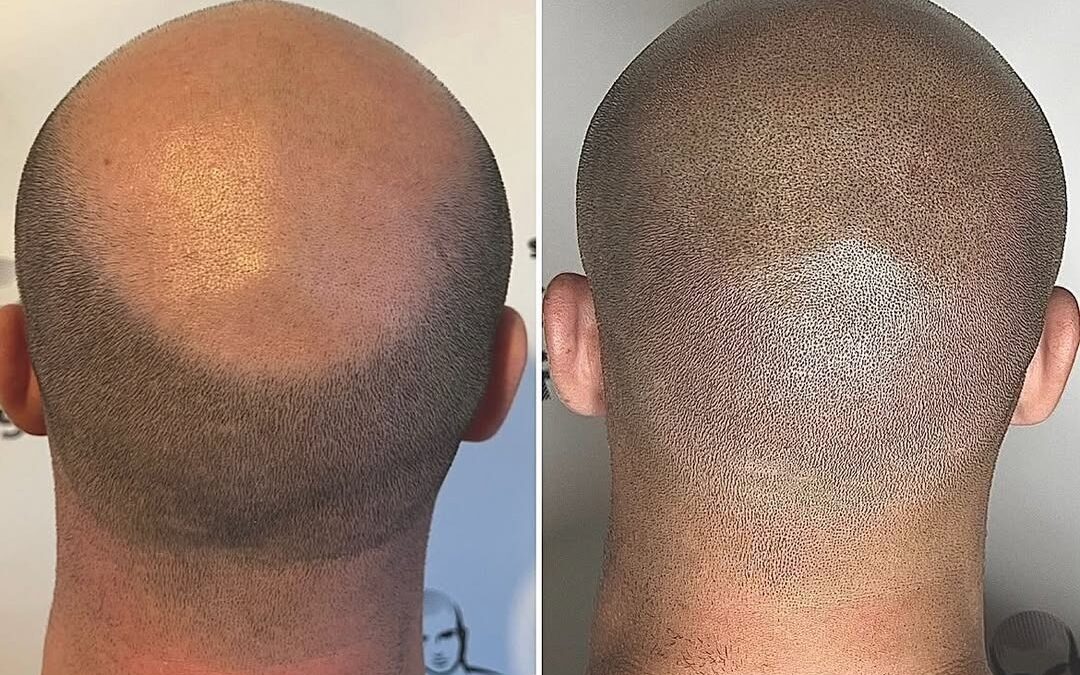
Seeing real scalp micropigmentation before and after transformations is one of the most powerful ways to understand what this treatment can achieve.
At Scalp Essence SMP, we are proud to share an extensive gallery of before and after results from our London clients, showcasing a wide range of hair loss types, skin tones, and treatment approaches.
From clients who had completely shaved heads with visible scalp to those with diffuse thinning at the crown, our before and after images demonstrate the dramatic, confidence-boosting difference that scalp micropigmentation can make.
Many clients describe the experience as life-changing – not just aesthetically, but emotionally and psychologically.
Scalp Micropigmentation for Women
Scalp micropigmentation for women is a growing treatment area that is often overlooked in conversations about hair loss solutions. Female hair loss affects millions of women in the UK, yet many feel there are limited options available.
At Scalp Essence SMP, we specialise in scalp micropigmentation for women, offering discreet, tailored treatments that address the unique patterns of female hair loss.
Unlike men who typically experience receding hairlines or bald patches, women more commonly suffer from diffuse thinning across the scalp, a widening parting, or thinning at the crown.
Our female SMP treatment is designed to add the appearance of density between existing hair follicles, making the scalp less visible and the hair appear fuller and thicker overall.
Women who come to Scalp Essence SMP for scalp micropigmentation in London often report that they feel more confident going out without hats or scarves, find their existing hair looks considerably thicker, and no longer feel the need to constantly style hair to disguise thin patches.
Our practitioners understand the sensitivity around female hair loss and create a comfortable, supportive environment for every client. The treatment is fully customisable to your natural hair colour and skin tone, ensuring entirely natural-looking results.
Scalp Micropigmentation Clinic
Choosing the right scalp micropigmentation clinic is critical to achieving results you will love. Not all practitioners are equal, and the quality of pigments, equipment, and technique can vary enormously. When evaluating a scalp micropigmentation clinic in London, it is important to look for trained and certified SMP practitioners with a strong portfolio, the use of premium, skin-safe pigments specifically formulated for SMP, a clean, professional clinic environment, a thorough consultation process, and genuine before and after results from real clients.
Scalp Essence SMP is a dedicated scalp micropigmentation clinic in London, committed to delivering the highest standard of care and results.
Our clinic uses only the finest SMP-specific pigments and state-of-the-art equipment to ensure consistent, long-lasting outcomes.
Why Choose Scalp Essence SMP for Scalp Micropigmentation London
With many options available in London, you might wonder what makes Scalp Essence SMP the right choice. Here is why hundreds of clients trust us for their scalp micropigmentation treatment:
- Expert Practitioners
- Natural Results
- Free Consultation
- Transparent Pricing
- Proven Track Record
- Treatments for Everyone
- Aftercare Support
At Scalp Essence SMP, we are passionate about helping people in London regain their confidence through scalp micropigmentation. We treat every client as an individual and take immense pride in delivering results that genuinely change lives.

by Ja Darrion | Nov 5, 2025 | Health Tips, Physical Health
If you’re working (or planning to work) as a fitness instructor, one of the most important business costs to consider is insurance. Getting the right liability insurance protects you from costly lawsuits if a client is injured, if property is damaged, or if you teach online or in a studio. But the cost matters — many instructors are looking for the cheapest insurance that still provides solid coverage.
In this article we’ll cover: what kinds of insurance you need, how pricing works, examples of cheap policies, and tips to keep your premium down while not under-insuring yourself.
Why fitness instructors need insurance
As a fitness instructor you are exposed to risk: you lead exercises, clients may have underlying health issues, equipment may malfunction, you may teach outside a gym or online. If a participant is injured and claims negligence, you could be held liable.
Liability insurance helps cover legal defence costs, settlements or judgements, and protects your personal assets. Many gyms, studios or venues require instructors to carry their own insurance or be added as an additional insured on the venue’s policy. A forum post from a personal trainer noted:
“In the US you can buy professional liability insurance as a sole proprietor/ individual … For under $20/month, get covered.” (Reddit)
If you skip this step, you’re taking a major business risk.
What kinds of insurance does a fitness instructor need?
Here are the typical types of coverage you’ll want to consider:
- General liability / public liability: Covers third-party injury and property damage (e.g., a client slipping during a class and injuring themselves).
- Professional liability (errors & omissions): Covers mistakes in your professional services (e.g., you give training advice and the client claims harm).
- Equipment / property insurance: If you own equipment (weights, machines) or train at home, you may wish to cover your equipment.
- Online coaching / virtual training cover: Since many instructors now train clients online, your policy should cover online work.
- Additional insured / venue cover: If you teach in multiple venues or are asked to be “added” to a gym’s policy, you’ll want appropriate endorsements.
According to industry data, the average cost for fitness instructor general liability insurance in the U.S. is about $29 per month (≈ $350/year) for a policy with limits of ~$1 million/$2 million. (insureon.com) That gives a benchmark for “cheap but standard” coverage.
What affects the cost of your insurance premium?
Several factors determine how much you’ll pay as a fitness instructor:
- Coverage limits: Higher limits (e.g., $1 M per claim / $2–3 M aggregate) cost more.
- Type of instruction & risk level: High-risk modalities (weightlifting, aerial, extreme fitness) cost more than low-risk.
- Location / venue: Training in busy gyms or outdoors, or in states with high litigation, may raise cost.
- Experience / claims history: If you have no claims and good qualifications, you’ll often pay less.
- Online vs in-person: Online training still has liability risk; if you’re doing both, your policy must reflect that.
- Business revenue / size: If you run a multi-instructor business or have employees, cost goes up.
- Add-ons: If you include equipment cover, cyber liability, or identity theft coverage, cost rises.
Knowing what drives cost helps you target the “cheapest acceptable” premium for your situation.
Examples of some of the cheapest fitness instructor insurance options
Here are real examples of very affordable insurance for fitness instructors:
- In the UK, one provider offers fitness instructor insurance from £5.64/month (≈ £67.68/year) for public liability up to £2 million. (Simply Business UK)
- Also in the UK, a specialist fitness industry insurer offers policies for instructors from £4.38 per month via direct debit. (fitpro.com)
- In the U.S., one provider offers group/functional training instructor liability insurance for $189/year (≈ $15.75/month) including $1 M/$3 M liability and identity theft coverage. (Insure Fitness Group)
- According to data, average general liability for a fitness instructor in the U.S. is ~$29/month (~$350/year). (insureon.com)
These numbers show that the “cheapest” real premium may range from ~£5/month in UK markets to ~$15-30/month in U.S. markets for base coverage. Of course, your quote depends on your specifics.
How to choose the cheapest right-level insurance (not just the cheapest)
Getting the cheapest possible policy isn’t always best if it leaves you under-insured. Instead, your goal should be the cheapest policy that gives you adequate protection for your risk level. Here are tips:
1. Define what coverage you need
If you only train one or two clients once a week in a low-risk environment (e.g., body-weight training in a studio), you might need lower limits. If you run high-risk classes, outdoor bootcamps, or train many clients in multiple places, you’ll need higher limits.
2. Compare quotes from multiple providers
Since premiums vary widely, get quotes from several insurers. Use brokers or comparison sites. A Reddit comment noted how the trainer got quotes under $20/month. (Reddit)
3. Start with minimal needed limits
If you’re new and low-risk, you might start with a $1 M per claim / $2 M aggregate policy and upgrade later as you grow.
4. Reduce risk to reduce premium
- Ensure you have proper certifications and qualifications (many insurers require you be certified).
- Use written waivers, screening forms (PAR-Q), and documented assessments.
- Train in safe environments, have clean equipment, keep client records.
These actions reduce risk and can reduce premium.
- Offer online sessions only with proper waivers and disclaimers.
Data shows instructors lacking insurance are at high risk. (Reddit)
5. Consider “Additional Insured” or “Venue Cover”
If you teach at a gym, ask whether you can be added to the venue’s policy at low cost. Some venues offer this option (~$25/year) which is cheaper than owning your own full policy (which may cost ~$175/year or more). (gyminsurance.com)
6. Avoid excessive add-ons if you don’t need them yet
If you don’t have equipment, you may skip gear cover for now. If you’re not doing outdoor events, skip event coverage. You can add these later.
7. Choose monthly vs annual payment wisely
Some insurers allow monthly payments (which increase total cost via fees). If you can pay annually upfront, you may save money.
Things to watch out for (so your “cheap” policy isn’t a false economy)
- Coverage limits too low: A $500,000 limit may sound cheap but may not cover a major claim.
- Exclusions: Ensure your policy covers your specific activities: group fitness, online training, outdoor sessions, bootcamps, etc.
- Territory limits: If you travel or train online internationally, ensure global or extended area cover. Some inexpensive policies may only cover local.
- Excess / deductible: A low premium might hide a very high deductible, which shifts risk back to you.
- Claims history and renewal: If you have a claim, your premium may escalate in future years.
- Certification requirement: Some insurers may require you hold a recognized certification; cheaper policies may expect you to be lower risk/trained.
- Professional liability vs general liability: If you’re giving nutrition or advice, you may need professional liability. Some cheap policies only cover general liability.
- Certificate of Insurance: Many gym venues will ask you for a certificate showing you hold valid coverage – make sure you can get one instantly online.
Final thoughts
If you’re looking for the cheapest fitness instructor insurance, you absolutely can find options from as low as £4-6/month in the UK or ~$15-30/month in the U.S. For example:
But the real goal is affordable + adequate. Make sure you understand your risk profile, get quotes, compare coverage, and ensure you’re covered for what you actually do. Being under-insured is worse than paying a few extra dollars.
In the fast-moving fitness industry, having the right liability insurance gives you peace of mind, lets you focus on your clients, and prevents one accident from becoming a business-ending lawsuit.

by Rolando Corley | Oct 29, 2025 | Health Tips, Physical Health
Abstract
Nutrition profoundly affects mental health, shaping mood, cognition, and emotional stability. Dr. Timotheus Guy emphasizes the essential link between diet and psychological well-being, presenting evidence-based strategies that integrate healthy eating and behavioral science to foster improved mental health outcomes.
Introduction
Recent research increasingly supports the strong connection between nutrition and mental health. Dietary habits have been shown to influence risks for depression, anxiety, and cognitive decline (Jacka et al., 2010; Opie et al., 2015). Recognizing this, Dr. Timotheus Guy advocates for a comprehensive approach that incorporates nutrition into mental health treatment, supported by behavioral strategies that enhance adherence and promote long-term lifestyle change.
Nutrition and Mental Health
A balanced diet rich in fruits, vegetables, whole grains, and lean proteins has been consistently associated with better mood regulation and enhanced cognitive performance (Lai et al., 2014). Key nutrients such as omega-3 fatty acids, B vitamins, and essential minerals play critical roles in neurotransmitter synthesis and overall brain health (Gómez-Pinilla, 2008). Conversely, diets high in processed foods, sugars, and saturated fats have been linked to increased risk of depression and emotional dysregulation (Sánchez-Villegas & Martínez-González, 2013).
Dr. Guy underscores that improving diet quality is a modifiable factor that can yield substantial psychological benefits—making nutrition a vital component of preventive and therapeutic mental health care.
Behavioral Approaches to Healthy Eating
Dr. Guy integrates behavioral science principles to support individuals in adopting and maintaining healthy eating habits. Techniques such as goal setting, self-monitoring, reinforcement, and feedback help sustain motivation and accountability. Technological tools—including mobile apps and wearable devices—can further enhance adherence by tracking dietary patterns, providing real-time feedback, and reinforcing positive behaviors (Burke et al., 2011; Michie et al., 2011).
This behaviorally informed approach empowers individuals to make gradual, sustainable changes, aligning healthy eating practices with improved emotional and cognitive well-being.
Conclusion
Combining nutritional science with behavioral interventions presents a powerful strategy for enhancing mental health. Dr. Timotheus Guy’s integrative framework highlights the reciprocal relationship between diet, behavior, and psychological functioning—encouraging individuals to view food as both nourishment and a foundation for mental resilience. Through intentional eating and behavioral self-awareness, improved mental health becomes an attainable, evidence-based outcome.
APA References:
- Benton, D. (2008). Micronutrient status, cognition and behavioral problems in childhood. European Journal of Nutrition, 47(Suppl 3), 38–50.
- Burke, L. E., Wang, J., & Sevick, M. A. (2011). Self-monitoring in weight loss: A systematic review of the literature. Journal of the American Dietetic Association, 111(1), 92–102.
- Gómez-Pinilla, F. (2008). Brain foods: The effects of nutrients on brain function. Nature Reviews Neuroscience, 9(7), 568–578.
- Godos, J., et al. (2020). Dietary patterns and mental health: A systematic review. Nutrients, 12(8), 2256.
- Jacka, F. N., Kremer, P. J., Berk, M., de Silva-Sanigorski, A. M., Moodie, M., & Swinburn, B. (2010). A prospective study of diet quality and mental health in adolescents. PLoS ONE, 5(9), e24881.
- Jacka, F. N., O’Neil, A., Opie, R., Itsiopoulos, C., Cotton, S., Mohebbi, M., & Berk, M. (2017). A randomized controlled trial of dietary improvement for adults with major depression. BMC Medicine, 15, 23.
- Lai, J. S., Hiles, S., Bisquera, A., Hure, A. J., McEvoy, M., & Attia, J. (2014). A systematic review and meta-analysis of dietary patterns and depression in community-dwelling adults. American Journal of Clinical Nutrition, 99(1), 181–197.
- Michie, S., van Stralen, M. M., & West, R. (2011). The behavior change wheel: A new method for characterizing and designing behavior change interventions. Implementation Science, 6, 42.
- Opie, R. S., O’Neil, A., Itsiopoulos, C., & Jacka, F. N. (2015). The impact of diet on depression, anxiety, and cognitive function. Nutrients, 7(3), 1089–1110.
- Sánchez-Villegas, A., & Martínez-González, M. A. (2013). Diet, a new target to prevent depression? BMC Medicine, 11, 3

by Rolando Corley | Oct 18, 2025 | Health Tips, Physical Health
Ontario’s diverse landscapes—from the misty shores of Lake Ontario to the rugged trails of Algonquin Provincial Park—serve as the perfect backdrop for a burgeoning wellness movement. In 2025, as demands on mental and physical health intensify amid hybrid work cultures and seasonal affective challenges, the province’s wellness centres ontario scene flourishes with innovative sanctuaries blending ancient rituals, cutting-edge therapies, and nature’s restorative embrace. These havens cater to everyone from urban dwellers seeking quick resets to adventure seekers craving immersive escapes, offering everything from thermal circuits to mindfulness immersions. With a focus on sustainability and personalization, Ontario’s wellness centres ontario not only pamper the body but also nurture the spirit, proving that true rejuvenation lies just a drive away from the GTA.
The Evolution of Wellness in the Great White North
Ontario has long been a pioneer in North American wellness, evolving from modest spa towns to world-class retreats that integrate Indigenous wisdom, European hydrotherapy, and Eastern philosophies. By 2025, the sector sees a surge in eco-conscious facilities, with many adopting zero-waste policies and locally sourced botanicals to align with provincial green initiatives. This shift responds to growing awareness of holistic health, where visitors prioritize experiences that address root causes like stress and inflammation rather than surface-level indulgences. Centers now emphasize evidence-based practices, such as cryotherapy for inflammation reduction and sound baths for nervous system regulation, backed by collaborations with local universities. Accessibility has improved too, with sliding-scale pricing and virtual prelude sessions allowing broader participation. Amid economic recoveries, these centres contribute over $2 billion annually to tourism, underscoring their role as economic and emotional lifelines. Whether nestled in wine country or urban high-rises, Ontario’s wellness centres ontario embody resilience, inviting guests to pause, reflect, and emerge empowered.
Spotlight on Grafton’s Dual Gems: Ste. Anne’s and Aham Brahmasmi
Grafton, a quaint hamlet in Northumberland County just 90 minutes east of Toronto, punches above its weight as a wellness epicenter, boasting two contrasting yet complementary retreats. Ste. Anne’s Spa, a historic country estate transformed into a European-style haven since 1998, remains a perennial favorite for its all-inclusive luxury. Set on 400 acres of rolling farmland, it features a grand castle-like manor where guests don plush robes for unlimited access to hydrotherapy pools, aromatic steam rooms, and vitality saunas. Signature offerings include the Nordic Circuit—a rhythmic alternation of hot soaks, cold plunges, and relaxation lounges—paired with farm-to-table cuisine emphasizing seasonal Ontario produce like heirloom tomatoes and wild-foraged mushrooms. In 2025, new additions like forest therapy walks guided by certified shinrin-yoku practitioners enhance its nature immersion, with overnight packages starting around $500 per night, including meals and classes like gentle hatha yoga.
Sharing Grafton’s serene vibe, the Aham Brahmasmi Wellness Centre emerges as a fresh, philosophically infused counterpart, opened in June 2024 to honor the Vedic mantra “I am the universe.” Located at 200 Ruttan Road on 10 acres of wooded trails and meadows, this sanctuary marries Ayurvedic traditions with contemporary holistic modalities, creating a bridge between ancient self-realization and modern burnout recovery. Founders, inspired by global spiritual lineages, designed it as a donation-based community hub where accessibility trumps opulence. Accommodations range from cozy twin-sharing rooms with queen beds to tent camping under the stars, all emphasizing communal harmony. Meals follow a sattvic ethos—vibrant vegetarian fare like quinoa khichdi and turmeric-ginger elixirs, sourced from on-site gardens. Programs shine with the three-day Re:Balance Yoga Retreat, led by intuitive facilitators like Pallavi, featuring yin-yang flows, EFT tapping for emotional release, and kirtan evenings by bonfires. At $300 for the weekend, it draws diverse crowds, from beginners exploring chakra balancing to veterans deepening pranayama practices. What sets Aham Brahmasmi apart is its mantra-infused ethos: sessions weave contemplative inquiries to foster unity with nature, turning a simple hike into a profound awakening. Positive whispers from early visitors highlight its gentle magic, with one noting, “It’s like the forest whispers back your truest self.”
If you are recovering from an injury, surgery, or dealing with chronic pain, professional rehabilitation can make a significant difference in your recovery journey. Looking for physical therapy Roanoke contact Roanoke Rehabilitation & Wellness. Their experienced team focuses on personalized treatment plans designed to improve mobility, reduce pain, and restore strength through evidence-based therapy techniques. Whether you are an athlete aiming to return to peak performance or someone seeking relief from everyday discomfort, they provide a supportive environment with hands-on care, exercise therapy, and guided recovery programs tailored to your specific needs.
Urban Oases and Lakeside Escapes: Toronto and Beyond
For city slickers, Toronto’s skyline hides pockets of serenity, exemplified by the Guerlain Spa at Hotel X, where lakefront views meet French perfumery artistry. Overlooking the Harbour, this 2025-renovated space offers bespoke facials using rare botanicals, alongside a eucalyptus steam room and vitality pool for urban detox. Packages blend in aromatherapy massages with CBD-infused balms, ideal for jet-lagged professionals, with day passes from $150.
Venturing westward, Burlington’s Pearle Hotel & Spa on Lake Ontario captivates with its infinity-edge pool mirroring azure waters, complemented by a traditional hammam for full-body gommage rituals. Emphasizing marine-inspired therapies, like algae wraps for skin renewal, it pairs wellness with waterfront dining, making it a romantic or solo recharge spot.
In the Blue Mountains, Scandinave Spa reigns as an outdoor thermal pioneer, its 2025 expansions including private cabin soaks amid evergreens. The signature cycle—hot tubs fed by geothermal springs, frigid Nordic waterfalls, and cedar-lined rest areas—promotes circulation and cortisol reduction, followed by trails for post-soak hikes. Entry at $99 for three hours appeals to families and groups, with add-ons like Swedish massages using local lavender oils.
Niagara-on-the-Lake’s Spa at Q, housed in the boutique 124 on Queen, fuses wine country allure with hydrotherapy innovation, boasting Canada’s inaugural Snow Room for cryogenic bliss alongside a halotherapy salt lounge. Treatments incorporate grape seed extracts for antioxidant boosts, syncing with vineyard tours for a sensorial symphony. Elora’s Mill Hotel & Spa, perched gorge-side, rounds out the provincial tapestry with solarium soaks and forest-bathing elixirs, its 2025 menu highlighting Indigenous smudging ceremonies for cultural depth.
Crafting Your Ontario Wellness Journey
Selecting a wellness centre ontario hinges on intent: crave luxury immersion or mindful minimalism? Budgets span $100 day visits to $1,000 multi-night stays, with many offering virtual tastings via apps. Prepare by hydrating deeply and journaling intentions; post-visit, sustain gains through home rituals like dry brushing or gratitude apps. As climate awareness peaks in 2025, opt for carbon-neutral spots like those in Algonquin’s Dimensions Retreats, where silent meditations amid ancient pines cultivate profound presence.
Ontario’s wellness centres ontario tapestry weaves indulgence with introspection, proving that balance is not a destination but a daily dance. From Grafton’s philosophical whispers to Blue Mountain’s invigorating chills, these sanctuaries remind us: in pausing to heal, we reclaim our vitality. Venture forth, breathe deeply, and let the province’s gentle rhythms restore your core.

by Rolando Corley | May 9, 2025 | Physical Health
Die Entscheidung für eine Leihmutterschaft ist für viele Paare ein bedeutender Schritt auf dem Weg zur Elternschaft. Da Leihmutterschaft in Deutschland gesetzlich verboten ist, suchen viele Paare Unterstützung bei einer Leihmutterschaft Agentur im Ausland. Doch was genau ist eine solche Agentur, welche Dienstleistungen bietet sie an und mit welchen Kosten sollten Interessierte rechnen? Dieser Artikel bietet einen detaillierten Überblick.
Was ist eine Leihmutterschaft Agentur?
Eine Leihmutterschaft Agentur fungiert als Vermittler zwischen den Wunscheltern und der Leihmutter. Sie übernimmt die Organisation des gesamten Prozesses, einschließlich der Auswahl der Leihmutter, der medizinischen Betreuung, der rechtlichen Absicherung und der logistischen Koordination. Ziel ist es, den Wunscheltern eine sichere und reibungslose Durchführung der Leihmutterschaft zu ermöglichen.
Dienstleistungen einer Leihmutterschaft Agentur
Die Aufgaben einer Leihmutterschaft Agentur sind vielfältig und umfassen:
- Auswahl der Leihmutter: Die Agentur stellt sicher, dass die Leihmutter gesundheitlich geeignet ist und den rechtlichen Anforderungen entspricht.
- Medizinische Betreuung: Sie koordiniert die medizinischen Untersuchungen, die In-vitro-Fertilisation (IVF) und die pränatale Betreuung.
- Rechtliche Beratung: Die Agentur sorgt für die rechtliche Absicherung der Wunscheltern, einschließlich der Klärung der Elternschaft und der Staatsangehörigkeit des Kindes.
- Logistische Unterstützung: Sie organisiert Reisen, Unterkünfte und andere praktische Aspekte, die während des Prozesses anfallen.
- Psychologische Betreuung: Einige Agenturen bieten auch psychologische Unterstützung für die Wunscheltern und die Leihmutter an.
Kosten einer Leihmutterschaft Agentur
Die Kosten für die Dienstleistungen einer Leihmutterschaft Agentur variieren je nach Land, Agentur und Umfang der angebotenen Leistungen. Im Allgemeinen können die Gesamtkosten einer Leihmutterschaft, einschließlich medizinischer, rechtlicher und logistischer Ausgaben, zwischen 50.000 und 180.000 Euro liegen. Ein erheblicher Teil dieser Kosten entfällt auf die Agenturgebühren, die in der Regel zwischen 8.000 und 30.000 Euro liegen.
Es ist wichtig zu beachten, dass diese Kosten je nach Land unterschiedlich sind. In Ländern wie den USA oder Kanada können die Kosten höher sein, während sie in osteuropäischen Ländern wie der Ukraine oder Georgien tendenziell niedriger ausfallen.
Auswahl einer seriösen Leihmutterschaft Agentur
Bei der Auswahl einer Leihmutterschaft Agentur sollten Wunscheltern sorgfältig vorgehen. Wichtige Kriterien sind:
- Erfahrung und Reputation: Eine etablierte Agentur mit positiven Erfahrungsberichten kann Vertrauen schaffen.
- Transparenz: Die Agentur sollte klare Informationen über den Ablauf, die Kosten und die rechtlichen Aspekte bereitstellen.
- Rechtliche Expertise: Da die rechtlichen Rahmenbedingungen komplex sind, ist es wichtig, dass die Agentur über entsprechende juristische Fachkenntnisse verfügt.
- Unterstützungsangebot: Eine gute Agentur bietet umfassende Unterstützung, einschließlich medizinischer und psychologischer Betreuung.
Rechtliche Aspekte der Leihmutterschaft
In Deutschland ist die Leihmutterschaft gemäß dem Embryonenschutzgesetz von 1990 verboten. Verträge und Vereinbarungen zwischen einer Leihmutter und den Wunscheltern haben nach deutschem Recht keine Rechtsgültigkeit. Kliniken und Agenturen dürfen die Organisation einer Leihmutterschaft in Deutschland nicht erleichtern oder unterstützen. Die Leihmutter wird bei der Geburt immer als die rechtliche Mutter betrachtet, nicht die Wunscheltern.
Nach der Geburt können die Wunscheltern die Adoption des Leihmutterkindes anstreben, was jedoch schwierig sein kann. Daher entscheiden sich viele Paare für eine Leihmutterschaft im Ausland, um rechtliche Klarheit und Sicherheit zu gewährleisten.
Fazit
Die Zusammenarbeit mit einer Leihmutterschaft Agentur kann für Paare, die ihren Kinderwunsch auf diesem Weg erfüllen möchten, eine wertvolle Unterstützung sein. Sie bietet nicht nur organisatorische und rechtliche Hilfe, sondern auch emotionale Begleitung während des gesamten Prozesses. Es ist jedoch entscheidend, eine seriöse und erfahrene Agentur zu wählen, um sicherzustellen, dass alle Aspekte der Leihmutterschaft professionell und ethisch korrekt gehandhabt werden.

by Rolando Corley | May 9, 2025 | Physical Health
Alpratsolaami, tunnetaan myös nimellä Xanax, on bentsodiatsepiini, jota käytetään yleisesti ahdistuneisuushäiriöiden ja paniikkihäiriöiden hoitoon. Suomessa ja monissa muissa maissa Alpratsolaami on reseptilääke, joka tarkoittaa, että sen käyttöön liittyy tiettyjä sääntöjä ja ohjeita. Tässä artikkelissa käymme läpi, mitä sinun tulee tietää ostaessasi alpratsolaami Xanax jauhetta, sen vaikutuksista, turvallisuudesta ja laillisuudesta.
Mikä on Alpratsolaami?
Alpratsolaami on bentsodiatsepiiniryhmään kuuluva lääke, joka vaikuttaa keskushermostoon. Se toimii sitoutumalla GABA-reseptoreihin aivoissa, mikä lisää rauhoittavaa vaikutusta. Tämä tekee siitä tehokkaan lääkkeen ahdistuksen ja paniikkihäiriöiden hoidossa. Alpratsolaami voi auttaa lievittämään ahdistuksen oireita, parantamaan unta ja vähentämään stressiä.
Alpratsolaamin Käyttö ja Annokset
Alpratsolaami on saatavilla eri muodoissa, kuten tabletteina ja jauheena. Jauhemuodossa se voi olla helpompi annostella tarkasti, mutta on tärkeää huomioida, että jauheen käyttöön liittyy tiettyjä riskejä, erityisesti jos sitä ei osteta laillisesti tai turvallisesti.
Yleinen alpratsolaamin annos vaihtelee potilaan tarpeiden ja lääkärin suositusten mukaan. On tärkeää noudattaa lääkärin ohjeita ja olla ylittämättä suositeltua annostusta, sillä liiallinen käyttö voi johtaa riippuvuuteen ja muihin terveysongelmiin.
Osta Alpratsolaami Xanax Jauhetta Laillisesti
Suomessa alpratsolaami on reseptilääke, mikä tarkoittaa, että sen ostaminen ilman reseptiä on laitonta. On erittäin tärkeää, että ostat lääkkeitä vain laillisista lähteistä, kuten apteekeista tai lääkärin kautta. Jos harkitset alpratsolaami Xanax jauheen ostamista, varmista, että:
- Sinulla on voimassa oleva resepti: Keskustele lääkärisi kanssa ja varmista, että alpratsolaami on oikea lääke sinulle.
- Ostat luotettavalta toimittajalta: Vältä ostamasta lääkkeitä epäilyttäviltä verkkosivustoilta tai mustilta markkinoilta. Lailliset apteekit tarjoavat lääkkeitä, joiden laatu ja turvallisuus on taattu.
- Tiedät mahdolliset sivuvaikutukset: Alpratsolaami voi aiheuttaa sivuvaikutuksia, kuten uneliaisuutta, huimausta ja muistihäiriöitä. On tärkeää olla tietoinen näistä ja keskustella lääkärisi kanssa mahdollisista riskeistä.
Alpratsolaamin Sivuvaikutukset
Kuten kaikki lääkkeet, alpratsolaami voi aiheuttaa sivuvaikutuksia. Yleisimmät sivuvaikutukset sisältävät:
- Uneliaisuus
- Huimaus
- Vaikeudet keskittymisessä
- Muistihäiriöt
- Kuiva suu
Vakavampia sivuvaikutuksia, kuten hengitysvaikeuksia tai allergisia reaktioita, voi esiintyä harvemmin, mutta ne vaativat välitöntä lääketieteellistä huomiota. Jos huomaat mitään epätavallista tai häiritsevää, ota yhteys lääkäriisi heti.
Riippuvuus ja Huumeiden Käyttö
Alpratsolaamin käyttö voi johtaa riippuvuuteen, erityisesti pitkäaikaisessa käytössä tai suurilla annoksilla. On tärkeää noudattaa lääkärin ohjeita ja olla käyttämättä lääkettä pidempään kuin on tarpeen. Jos tunnet, että sinulla on ongelma lääkkeen käytön kanssa, hakeudu apua ammattilaiselta.
Miten Osta Alpratsolaami Xanax Jauhetta Turvallisesti
Jos olet saanut reseptin alpratsolaamille, voit ostaa sen turvallisesti seuraavasti:
- Käy Apteekissa: Paikallinen apteekki on paras paikka ostaa reseptilääkkeitä. Apteekit tarjoavat lääkkeitä, jotka on testattu ja hyväksytty laillisesti.
- Verkkokaupat: Joillakin laillisilla verkkosivustoilla voi olla mahdollisuus ostaa reseptilääkkeitä. Varmista, että sivusto on luotettava ja että se vaatii reseptin ennen ostamista.
- Keskustele Lääkärisi Kanssa: Jos sinulla on kysymyksiä tai huolia alpratsolaamin käytöstä, älä epäröi keskustella lääkärisi kanssa. He voivat tarjota lisätietoja ja neuvoja.
Alpratsolaamin Laillisuus Suomessa
Suomessa alpratsolaami on laillinen lääke, mutta sen käyttö on tiukasti säänneltyä. Voit saada alpratsolaamia vain lääkärin määräämällä tavalla ja reseptillä. On tärkeää kunnioittaa näitä sääntöjä, jotta varmistat oman ja muiden turvallisuuden.
Johtopäätös
Alpratsolaami, eli Xanax, on tehokas lääke ahdistuksen ja paniikkihäiriöiden hoitoon, mutta sen käyttö vaatii huolellisuutta ja vastuullisuutta. Osta alpratsolaami Xanax jauhetta vain laillisista ja luotettavista lähteistä, ja varmista, että sinulla on voimassa oleva resepti. Muista myös keskustella lääkärisi kanssa kaikista huolistasi ja mahdollisista sivuvaikutuksista.
Pidä mielessä, että terveys on tärkein, ja lääkkeiden käytön turvallisuus on ensisijainen tavoite. Oikealla tiedolla ja vastuullisella käytöllä voit hyödyntää alpratsolaamin tarjoamia etuja turvallisesti ja tehokkaasti.